


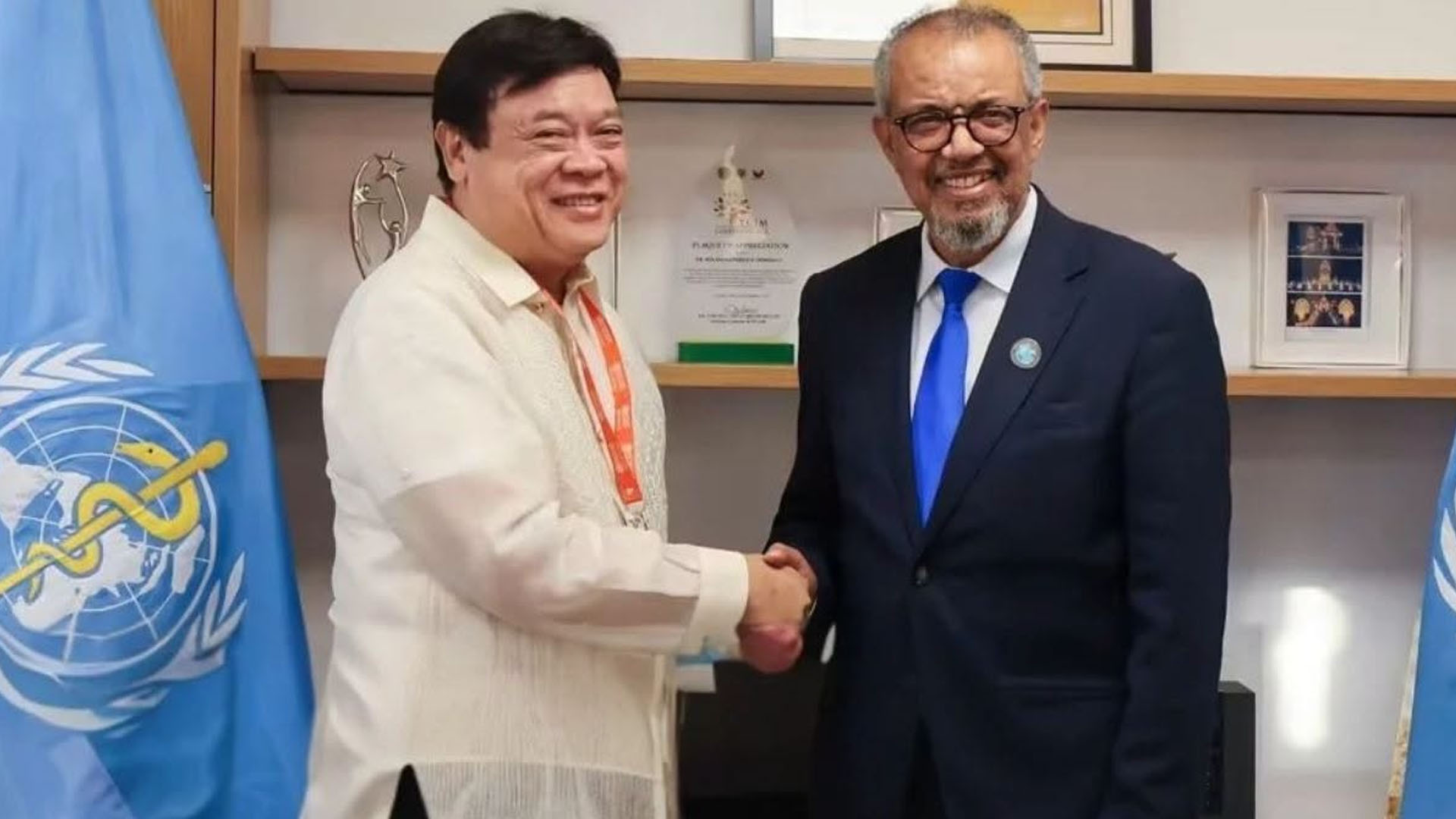






The Philippines has proposed a regional stockpile of essential medical supplies and pooled procurement to cut costs, strengthen emergency preparedness, and ensure equitable access to medicines and vaccines across the Western Pacific, the Department of Health (Philippines) said Friday.
The proposal, raised during the 77th session of the World Health Organization’s Regional Committee for the Western Pacific, drew support from member states, with pilot initiatives involving selected countries being considered, the DOH said in a news release.
The four-day meeting also tackled hypertension and tobacco control, immunization and the responsible use of artificial intelligence in health care.
The department said these priorities align with its Unified National Agenda for Health (UNA Para sa Kalusugan), which seeks to improve access to quality health services under the Universal Health Care program.
“Under UNA Para sa Kalusugan, the DOH and PhilHealth (Philippine Health Insurance Corp.) are working together to strengthen primary care and improve access to essential health services,” Health Secretary Edwin Mercado said.
“Our goal is to ensure that health reforms translate into services that Filipinos can actually access and benefit from,” he added.
The DOH and PhilHealth aim to register at least 60 million Filipinos under the Yaman ng Kalusugan Program (YAKAP) and reach 48 million people through PhilHealth GAMOT (Guaranteed and Accessible Medications for Outpatient Treatment( for screening and access to medicines.
The regional committee also called for stronger hypertension screening, affordable essential medicines and improved primary care, as the condition affects nearly one in three adults in the Western Pacific.
Member states were urged to strengthen tobacco control, regulate emerging nicotine products and impose higher taxes to curb tobacco-related deaths, which number about three million annually, the DOH said.
Participants called for efforts to close immunization gaps and protect children against vaccine-preventable diseases. Discussions on artificial intelligence focused on responsible use to improve public health decisions and expand services, particularly in underserved communities.
The DOH said the initiatives underscore the Philippines’ commitment to regional cooperation in improving health outcomes and strengthening preparedness for public health emergencies. (PNA)