

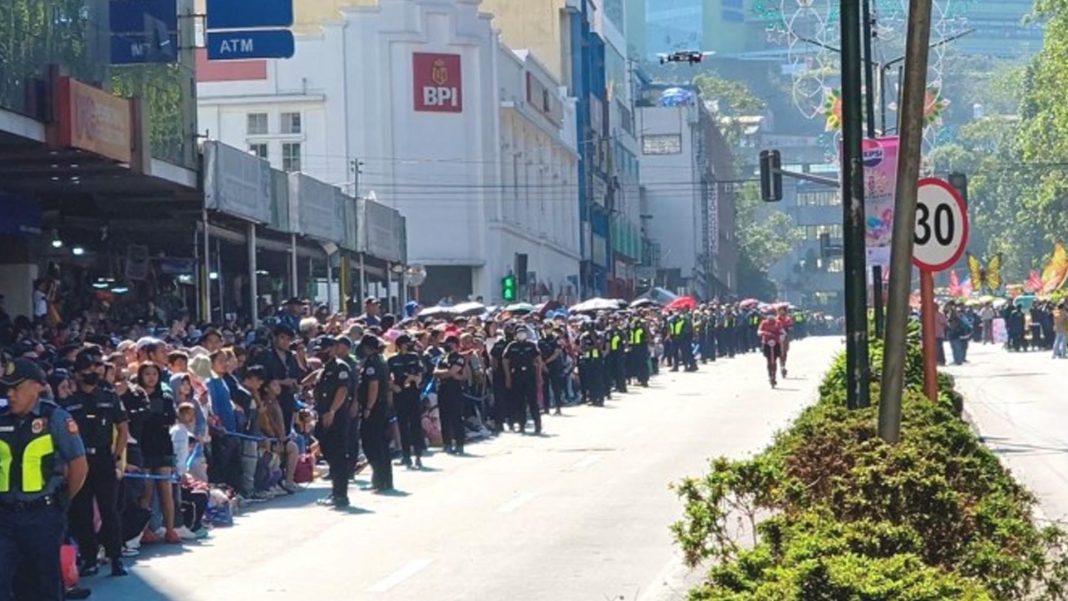







Organizers of the 30th edition of the Baguio Flower Festival on Monday said the event’s two grand parades — street dancing and flower float — drew to the city over 140,000 spectators for the festival which ended without untoward incidents.
“We are happy that there were a lot who came to watch the events,” Anthony de Leon, chair of the Executive Committee of the Baguio Flower Festival Foundation said in an interview.
He said the two highlight parades are the festival’s crowd-drawers, with tourists, both local and foreign, and officials of sister cities visiting the city to join the celebration.
The Baguio City Police Office (BCPO) estimated the crowd on Sunday alone to have reached 143,000 spread out on both sides of the road, estimated to be more than 2 kilometers from Upper Session Road to the Melvin Jones football field — where the field demonstration was held.
In a statement, BCPO director Col. Ruel Tagel said about 1,400 police personnel were deployed across the parade route for visibility, patrol, traffic management, crowd control, security monitoring and emergency response.
They were supported by specialized units, standby Civil Disturbance Management teams, Reactionary Standby Support Force personnel and drone operators.
Meanwhile, Mayor Benjamin Magalong said that the grand highlights of the month-long celebration were carried out peacefully and successfully.
“We are happy because this also translates to better income for our many businesses, even the vegetable sellers and souvenir shops as well as vendors are benefitting when there are many tourists,” he said.
He also thanked the residents for their continuing support and cooperation.
“Our volunteers, barangays and even the performers are locals who continue to extend their support and we are glad that the very core for the creation of the festival is still alive — that is community participation,” he said.
He said that aside from special permits paid to the city government by sellers at the Session in Bloom and the market encounter, the taxes paid by accommodation establishments and eating facilities are also adding up to the city’s coffers.
Launched in 1995, Panagbenga was aimed at reestablishing the city as a prime tourist destination in the aftermath of the July 1990 Luzon earthquake. (PNA)