


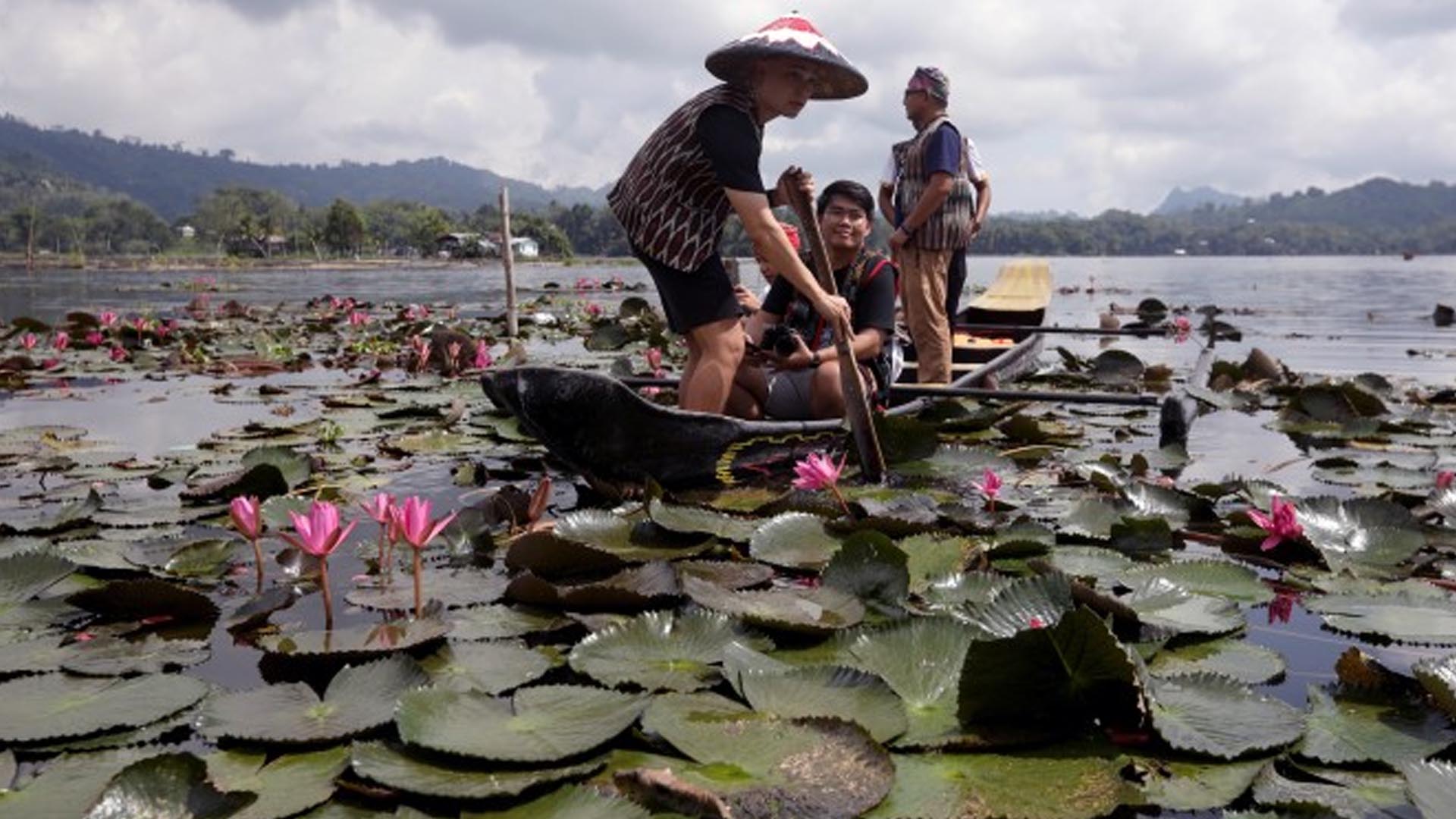






Lake Sebu, a farming community shaped by the traditions of the T’boli and Ubo-Manobo Indigenous Peoples, has been recognized as the Philippines’ first United Nations Food and Agriculture Organization (FAO) Village for its climate resilience, sustainable food systems and environmental stewardship.
The Climate Change Commission (CCC) on Tuesday said the recognition places Lake Sebu among more than 300 villages worldwide in the FAO Villages global network and highlights how local communities can provide practical models for adapting to climate change.
“Today’s recognition says that Lake Sebu possesses something whose value extends beyond its boundaries,” CCC Vice Chairperson and Executive Director Robert E.A. Borje said during the unveiling of the FAO Village marker at the Gono Menos Bnek, or the Lake Sebu Rice Museum on July 16.
The event gathered local officials, development partners and members of Indigenous communities to celebrate the milestone.
“Something worth strengthening. Something worth protecting. Something from which the rest of the world can continue to learn. In that sense, this recognition is not only about Lake Sebu. It is also about our shared responsibility,” Borje said.
Borje said the recognition reflects the goals of the Philippine National Adaptation Plan (NAP) 2023-2050, the country’s long-term climate resilience strategy developed under President Ferdinand R. Marcos Jr.
The plan integrates the protection of Indigenous culture and heritage as part of climate adaptation efforts.
The FAO cited Lake Sebu for its efforts in conserving natural heritage and biodiversity, sustaining food traditions, linking food culture and rural heritage with education, hospitality and tourism and promoting rural development through innovative scientific and digital solutions.
The designation recognizes practices that have long been part of life in the municipality. For generations, the T’boli and Ubo-Manobo communities have cultivated heirloom rice varieties, protected forests and freshwater ecosystems and preserved Indigenous knowledge that supports food production and biodiversity.
“Not that Lake Sebu is perfect. Not that every challenge has already been overcome. Rather, that this community continues to demonstrate something the world needs to see more of — that development, culture, food systems and environmental stewardship need not compete with one another. They can strengthen one another,” Borje said.
FAO Representative in the Philippines Lionel Dabbadie said Lake Sebu’s strength lies in the relationship between its people, farmers and fisherfolk, and the environment they have nurtured for generations.
“What makes Lake Sebu truly exceptional is something much deeper — it is the relationship among its people, its farmers and fisherfolk, and the land and lakes they have nurtured together for generations,” Dabbadie said.
He said the community understood the importance of working with nature even before concepts such as biodiversity conservation and climate resilience became widely recognized.
“Nature is not simply a resource to be exploited, but a partner to be respected,” Dabbadie added.
The recognition reflects years of collaboration among Indigenous communities, local government units, provincial governments, national agencies, academic institutions and development partners.
Mario Samaja, former senior coordinator at FAO headquarters in Rome who led the FAO Villages Recognition Initiative, emphasized the role of local communities in sustaining the initiative.
“Lake Sebu fits perfectly into this FAO Villages Recognition Initiative. Here, you, the local Indigenous communities, manage lakes, wetlands, forests and farms applying your long-standing traditions and knowledge,” Samaja said.
He said the municipality’s lakes, forest ecosystems, waterfalls and agroecological landscapes support livelihoods while preserving cultural identity and food security.
Nonito Malingay, a farmer-cooperator from Sitio El Lumet, Barangay Luhib, said one of Lake Sebu’s major achievements is the conservation of traditional rice varieties.
“A total of 102 traditional rice varieties are now safely conserved in the PhilRice Genebank under a black box agreement. This is a priceless legacy that protects our genetic resources for future generations,” Malingay said.
“Our traditional crops are not just food. They are our life, our ancestors’ legacy and our children’s inheritance. They are our living treasures,” he added. (PNA)