

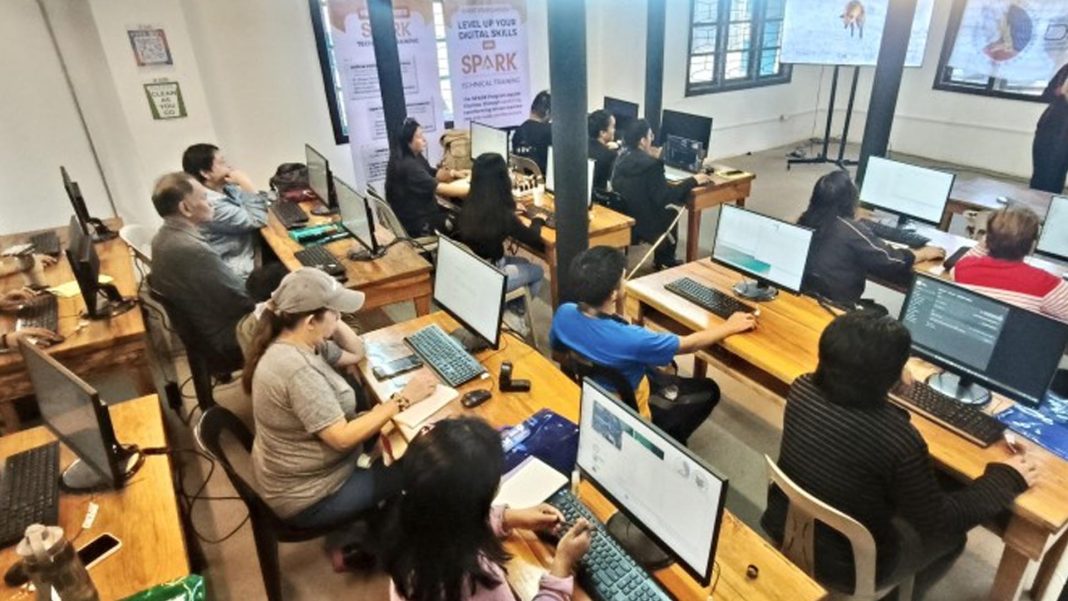







For the first time in the Cordillera region, the Department of Information and Communications Technology (DICT) is conducting a computer and online skills training specifically designed to help visually impaired persons gain digital skills and improve their employment prospects.
The 10-day training, attended by 25 persons with disabilities, including the visually impaired, is being conducted under the DICT’s Strengthening the Philippine Workforce through Adaptive and Responsive Digital Knowledge (SPARK) program.
“This is a customized training for the visually impaired, teaching them first how to boot a computer, connect to the Internet, and navigate the computer,” said Frenilyn Mae Lamsis, DICT-Cordillera focal person for the SPARK program.
Lamsis said the training aims to ensure that persons with disabilities are not left behind as technology becomes increasingly important in education, employment, and everyday life.
Participants will learn basic computer and Internet skills, as well as Microsoft Word, Excel, and PowerPoint, which are commonly used in workplaces.
“The skills will make them work-ready. Or if they cannot use it for work, they will have knowledge of how to use the computer,” Lamsis said.
She added that digital skills could also help persons with disabilities take more active roles in their organizations and communities.
The SPARK program is a DICT digital upskilling initiative aimed at bridging the digital skills gap, promoting digital entrepreneurship, and creating online and remote income opportunities.
Lamsis said the DICT previously conducted SPARK training for persons with disabilities in Baguio City in 2023, focusing on virtual assistant jobs. No visually impaired participants joined that training.
One participant from the 2023 program is now working at Baguio City Hall, she said.
The current training began with an onboarding session where participants practiced proper hand positioning on a keyboard, turning on a computer and completing a basic form.
The training uses NonVisual Desktop Access, or NVDA, a free screen-reading software that converts text displayed on a computer into speech.
Monica Caminero, a social worker with Resources for the Blind, Inc., which manages the training, said NVDA allows visually impaired users to navigate a computer independently.
“Once it is installed in the computer, it speaks, and the visually impaired can navigate the computer. But they must memorize some shortcuts like Control-S and others,” Caminero said.
Resources for the Blind has partnered with the DICT and Department of Education to provide digital education and training for blind learners and teachers.
Caminero said visually impaired persons are eager to learn computer skills because these can help them pursue formal education and employment, including opportunities in the business process outsourcing industry.
Visually impaired trainer
The training is led by Maria Bless Adriano, a blind trainer from Resources for the Blind who guides participants through computer exercises using keyboard commands and shortcuts.
Caminero said Adriano, who is totally blind and a psychologist who graduated magna cum laude, is able to connect with participants because she shares their experience.
“She relates with the participants, being one of them; that is why she becomes an effective trainer,” Caminero said.
The DICT also provides digital training for women, senior citizens, persons with disabilities, micro, small and medium enterprises and learners as part of its efforts to expand access to technology. (PNA)

