


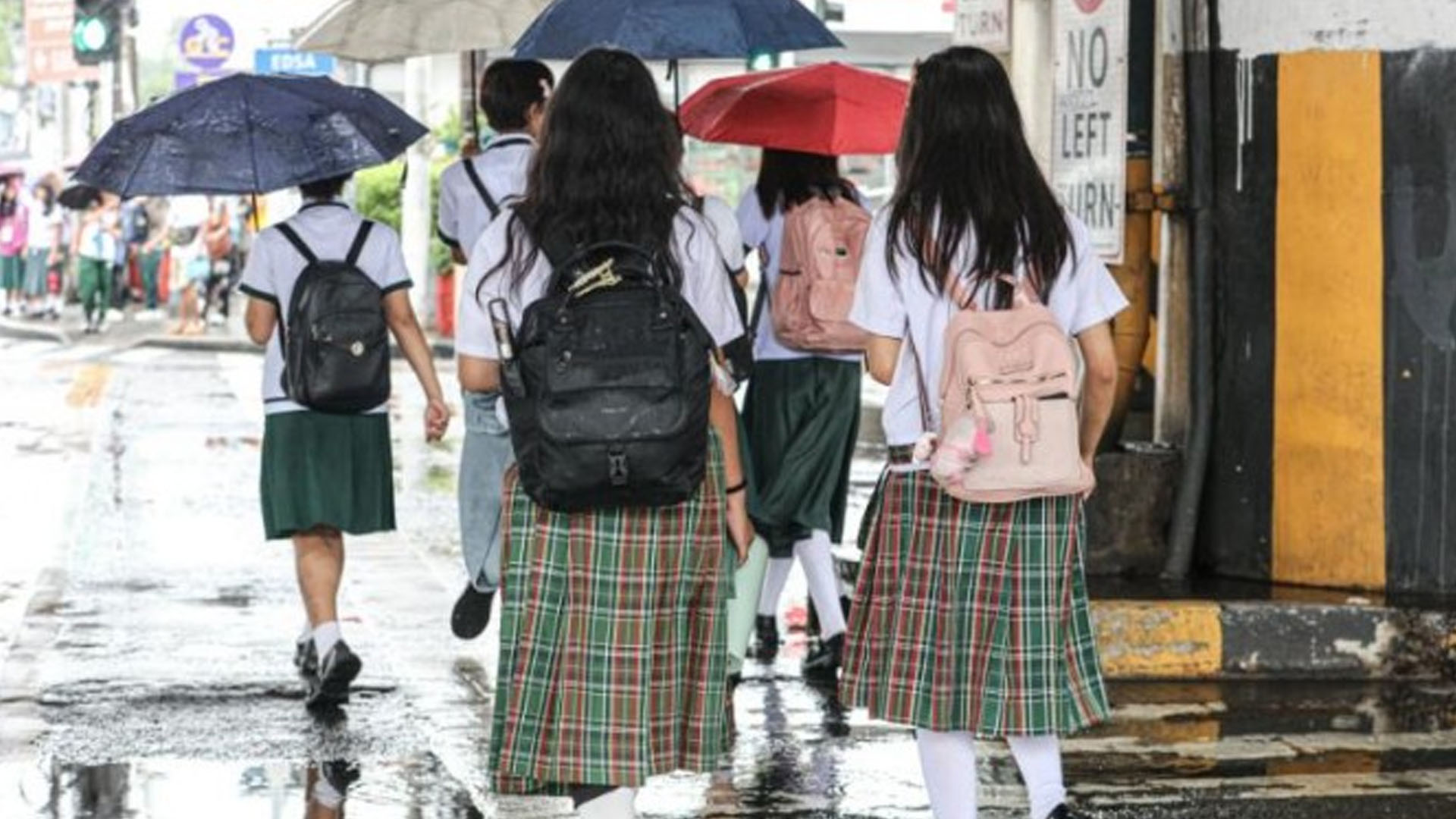






To protect learners and teachers while ensuring learning continuity, the Department of Education (DepEd) on Monday activated its Education in Emergencies framework through its 4H protocol amid the suspension of in-person classes.
This comes as more than 6.5 million learners and 288,967 teaching and non-teaching personnel were reportedly affected by the in-person class suspension.
As of Monday, 10,029 schools have suspended face-to-face classes amid heavy rains brought about by the enhanced southwest monsoon or “habagat”.
In a statement, DepEd Secretary Sonny Angara said the 4H protocol, which includes “Hinto, Hinga, Hinay, and Hayo”, seeks to ensure learning delivery while upholding learners’ safety and readiness.
“Kapag malakas ang ulan, baha ang daan, o may risk sa safety ng learners at teachers, hindi puwedeng one-size-fits-all ang decision (When there’s heavy rains, flooding along the way, or safety risk to learners and teachers, a one-size-fits-all decision is not applicable),” he said.
DepEd clarified that learning continuity does not mean “forcing regular academic work during unsafe or highly stressful conditions.”
“Kailangan malinaw ang batayan: ligtas ba, kaya ba, at anong klaseng learning support ang angkop (There must be a clear basis: is it safe? Are they capable? And what learning support is appropriate)?” Angara said.
“Iyan ang layunin ng 4H framework — gabayan ang schools kung kailan tutuloy, kailan babagalan, kailan hihinga, at kailan kailangang huminto muna (That’s the aim of 4H Framework –guide the schools until when they can continue, when to slow down, when to breathe, and when to pause).”
When conditions are unsafe or when basic needs of learners are at risk, “Hinto” is applied to ensure safety, protection, or basic needs are at risk.
At this level, academic activities are temporarily stopped to prioritize safety, emergency response, and essential support.
“Hinga” is used when learners, teachers, and school personnel need time to recover from stress, disruption, or displacement.
Under this mode, schools may conduct well-being checks, psychosocial support, and light asynchronous activities.
Submissions and regular academic requirements, however, should not be required under “Hinga”.
Moreover, learning that continues in an adjusted and teacher-led manner amid disruptions is applicable under “Hinay”.
This works, either through synchronous or asynchronous modalities, with considerations on available resources and connectivity.
For “Hayo”, learning safely resumes once conditions return to normal.
Besides the 4H framework, the DepEd also urged schools to update their Learning and Service Continuity Plans.
All schools are also ordered to coordinate with DepEd field offices, local government units, and disaster risk reduction agencies. (PNA)