


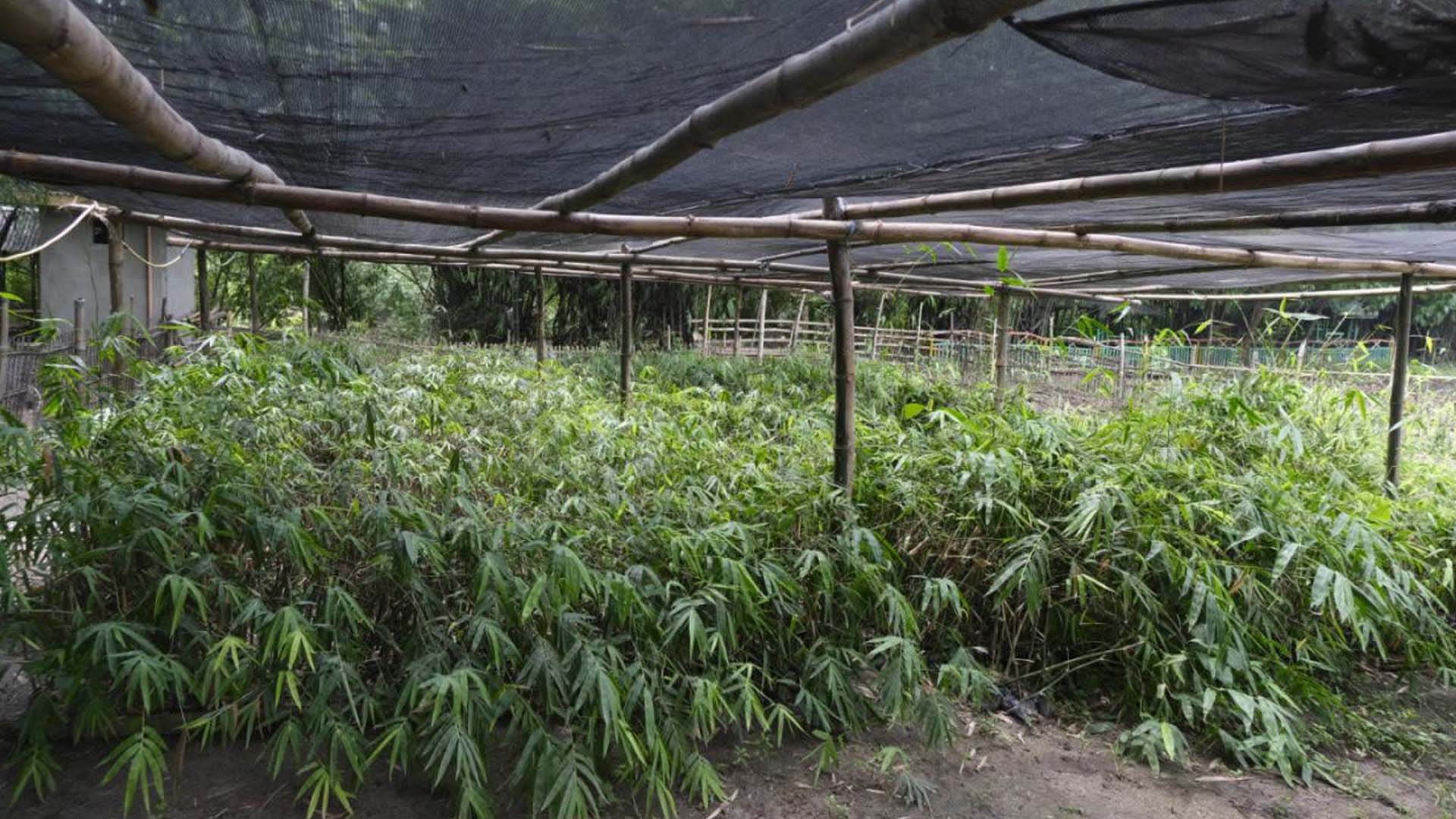






The Department of Environment and Natural Resources (DENR) is expanding nature-based measures, including bamboo plantations, soil protection structures and small water impounding systems, to help upland farmers conserve water and protect agricultural lands as the country prepares for El Niño.
In a news release Wednesday, the DENR said the initiatives cover farming communities in several provinces in the country, promoting soil moisture conservation, erosion control and better management of available water supplies.
Environment Secretary Juan Miguel Cuna said these interventions are needed to protect agricultural productivity and rural livelihoods during prolonged dry spells.
“Climate-resilient agriculture is essential to maintaining national food and water security during severe El Niño events,” Cuna said during a Cabinet meeting on El Nino on Oct. 5.
“Through innovative projects like the Capas Bamboo Ecopark in Tarlac, soil conservation structures in Zambales, and Small Water Impounding Systems in Catanduanes and Soccsksargen, the DENR is providing practical, nature-based tools to our upland farming communities. By conserving soil moisture and regulating local microclimates, we are ensuring that rural livelihoods remain viable even during extended dry spells,” he added.
Cuna said the DENR’s Provincial Environment and Natural Resources Office (PENRO) in Capas is developing a bamboo ecopark and improving nursery operations through drip irrigation and better seedling propagation, noting how bamboo can help retain soil moisture, support groundwater recharge and reduce erosion.
The Manila Bay Site Coordinating and Management Office said these functions preserve a healthier landscape especially during extended periods of limited rainfall.
In Zambales, the DENR is applying contour farming, stone bunds and mulching in its National Greening Program sites to limit soil erosion and moisture loss, helping preserve the productivity of agricultural lands.
The department is also working to ensure that water supplies are used responsibly as dry conditions put pressure on farms and local water resources.
Meanwhile, the DENR offices have established coordination protocols in coordination with the National Irrigation Administration and local irrigators’ associations in the Ilocos Region to regulate surface water diversion and protect water tables.
Information campaigns on Presidential Decree No. 1067, or the Water Code of the Philippines, have also been conducted in Currimao, Ilocos Norte; San Fabian and Lingayen in Pangasinan; Tagudin, Ilocos Sur; and Caba, La Union, targeting farming communities to help them understand legal limits on water extraction and promote sustainable irrigation practices.
In Catanduanes, the DENR has presented completed Small Water Impounding Systems to the provincial disaster risk reduction and management council as alternative water sources for agricultural communities vulnerable to drought, while existing impounding facilities within the Mt. Matutum and Allah Valley Protected Landscapes are being maximized in Soccskargen to help sustain upland agroforestry farmers during dry periods.
The DENR is also eyeing the expansion of agroforestry demonstration sites in major river basins, incorporating drought-tolerant native trees and bamboo to improve the resilience of landscapes over time.
During the Cabinet meeting, President Ferdinand R. Marcos Jr. directed agencies to prepare for worst-case scenarios and called on the Department of Agriculture (DA) to develop a work plan addressing the expected effects on farmers and fisherfolk.
The DENR said its programs complement DA’s efforts, including the solar-powered irrigation systems, additional seeds and fertilizer, and cloud seeding where conditions permit, to sustain agricultural production. (PNA)