

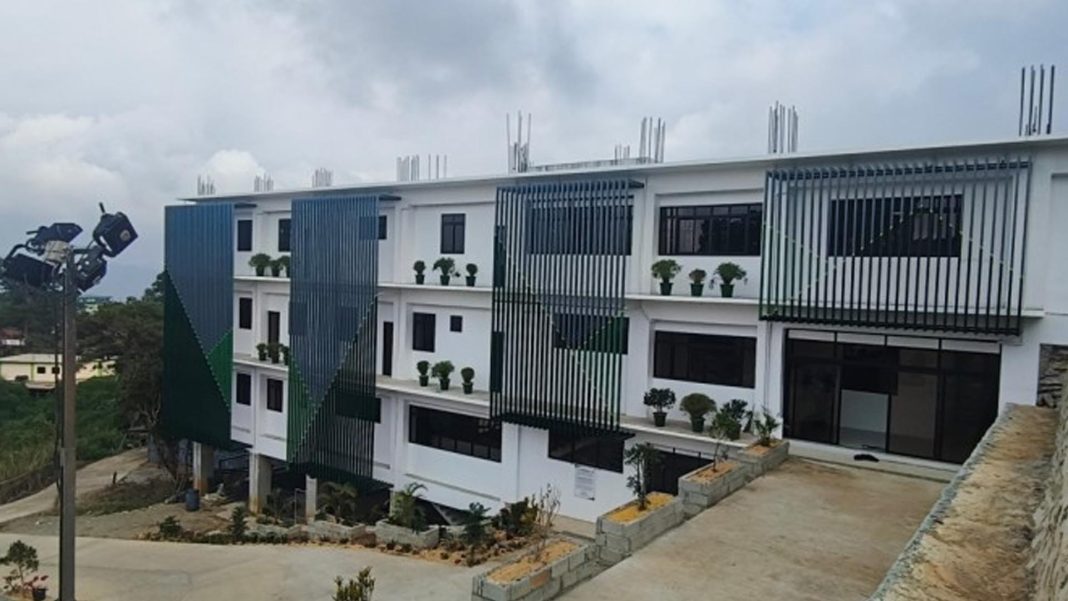







The Department of Agriculture (DA) has finished building a PHP99-million, three-story facility that will serve as the integrated agricultural and health laboratory for the Cordillera Administrative Region (CAR), making services more accessible to the public, especially farmers.
“There will be four laboratories that will operate here, all together in one place for easier access, especially the farmers who are the primary clients,” said Dr. Ofelia Qarah Pacio, the DA-CAR’s chief of the integrated laboratory division, told the Philippine News Agency on Thursday.
She identified the following laboratories as the Regional Soils Laboratory, the Crop Protection Center, the Animal Disease and Diagnostic Laboratory, and the Feed Chemical Analysis Laboratory.
Located at the Baguio Animal Breeding and Research Center in Santo Tomas, the laboratory will complete the soil analysis and fertility map, guiding whether the soil needs fertilizer and what components to add or reduce.
The current laboratories are located in different areas, making access for farmers difficult.
Without soil testing, farmers often add any additives they believe are suitable, which raises costs without data to support their choices.
In terms of crop diseases, the center will also produce biocontrol agents that are natural and environmentally friendly, aiming to minimize, if not eliminate, the use of chemicals and pesticides.
Chemical feed analysis is necessary to evaluate animal feeds, including the nutritional components of high-value crops.
“We intend to expand the crops we analyze to allow us to further improve on the quality of produce, especially the high-value crops that we need to be competing in the market,” Pacio said.
Animal diseases such as African swine fever (ASF) and avian flu influenza that significantly affect agricultural produce must also be addressed because of their substantial impact.
She said the integrated laboratory’s services will be free for the farmers and carry a minimal fee for the researchers and students.
“We charge minimal for analysis needed by researchers and we give discounts to students. It is free if involving important diseases that have economic and health hazards,” Pacio said.
The facility will begin receiving equipment anytime this month and throughout the rest of the year, with a budget allocation approved for 2026.
In a separate interview, Dr. Maribel Mananguit, head of the soils laboratory, said that farmers in remote areas can submit testing requests through their local government unit. Results, along with interpretation and recommendations, are returned through the same channel.
“We ask the farmers to utilize the facility. This is for them, which is the government’s way of helping improve the industry so that they can continue to help feed the people,” she said. (PNA)