
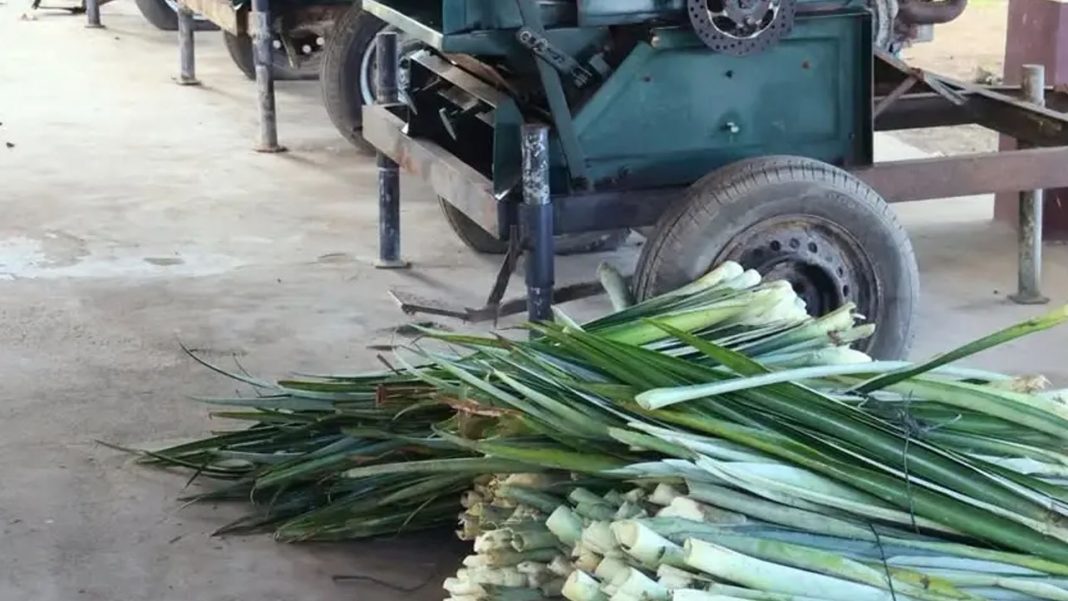






The Philippine Fiber Development Authority (PhilFIDA) is encouraging pineapple farmers in Ormoc City, Leyte to cultivate the MD2 variety to support local fiber production and provide an alternative source of income for farming communities.
PhilFIDA-Eastern Visayas Director Joseph Salas said that despite Ormoc City’s decades-long pineapple industry, the potential of pineapple leaves as a source of textile fiber remains largely untapped.
Earlier this year, PhilFIDA turned over the Pineapple and Other Fiber Crops Processing Center in Ormoc City. However, the facility has yet to maximize its operations due to the lack of sufficient raw materials, Salas said in a phone interview on Friday.
He explained that most pineapple growers in the city currently cultivate the Queen variety, also known as Formosa, which has shorter leaves and is less suitable for fiber extraction.
“We are introducing the MD2 pineapple variety since it has a longer leaf, which is ideal for fiber production. The fruit is larger and is also sweet, just like Queen pineapple,” Salas said.
Pineapple leaf fiber, also known as piña fiber, is used in producing breathable and lightweight fabrics for garments and other clothing products, including Barong Tagalog, dresses, and shawls.
To support the initiative, the regional PhilFIDA office turned over 5,000 pieces of MD2 pineapple planting materials to farmers in Ormoc City on Nov. 3.
According to Salas, the distribution aims not only to increase pineapple production but also to establish a sustainable supply of raw materials for the city’s processing facility.
The initiative is expected to create additional livelihood opportunities for farmers by allowing them to participate in a more integrated and value-added agricultural enterprise.
The latest distribution also builds on PhilFIDA’s earlier commitment to provide 10,000 pineapple planting materials to Ormoc City for the establishment of plantations dedicated to pineapple fiber production.
PhilFIDA said it will continue coordinating with the Ormoc City government, farmer organizations, and other stakeholders to promote agricultural diversification and strengthen local fiber processing initiatives across Eastern Visayas.
The program seeks to expand the economic potential of the local pineapple industry by developing not only its fruit production but also the use of its leaves as a source of textile fiber. (PNA)

