

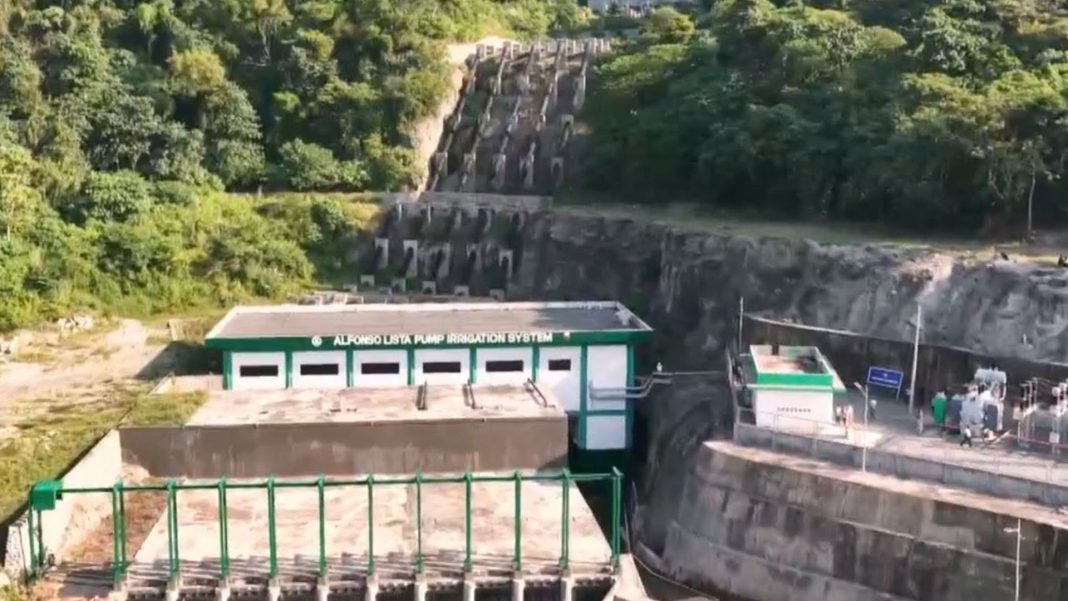







President Ferdinand R. Marcos Jr. on Monday said a newly inaugurated pump irrigation system in Ifugao is projected to increase rice production from 900 metric tons to 26,000 metric tons once fully utilized, expanding the area served by irrigation from 275 to 2,300 hectares.
Marcos said the Alfonso Lista Pump Irrigation System (ALPIS), which draws water from the Magat Dam Reservoir, would help bring reliable irrigation to more farmland as the country prepares for the looming effects of the “very strong” El Niño expected to hit the country.
“Ang produksyon ng palay noon ay 900 metric tons… ‘Pag nagamit na ito, pagka fully utilized na itong ating ALPIS, itong ating pumping station, ang projection natin na ang magiging ani ay 26,000 tons (Rice production used to be 900 metric tons. Once ALPIS is fully utilized, our projected harvest will be 26,000 tons),” Marcos said.
He said the expansion of irrigation would also increase the projected earnings of farmers in the area from PHP16 million to PHP159 million, although he did not specify the period covered or whether the figures referred to gross or net earnings.
Marcos stressed that irrigation is crucial to agricultural production, particularly as drought conditions threaten water availability.
“Naging mas mahalaga pa ito dahil nararamdaman na natin ang ‘super’ El Niño na tinatawag (This has become even more important because we are already feeling the effects of what is called ‘super’ El Niño),” he said.
He said the government was checking the condition and operation of irrigation facilities to ensure farmers could continue accessing water during severe drought, alongside household and industrial users.
During the event, Marcos also discussed the Pamplona Solar Pump Irrigation Project (SPIP) in Barangay Gattu, Pamplona, Cagayan, saying it would reduce reliance on diesel fuel and electricity from the national grid.
He also said the government has established about 3,000 solar-powered irrigation systems nationwide and would continue expanding such initiatives to support agricultural production.
Marcos credited the National Irrigation Administration, Department of Agriculture, local governments and farmer cooperatives for helping implement irrigation projects, saying government efforts alone would not be enough to build and sustain the facilities. (PNA)

