








The Philippines, as this year’s chair of the Association of Southeast Asian Nations (ASEAN), will steer the bloc and ensure that the region remains “on track” to becoming the world’s 4th largest economy.
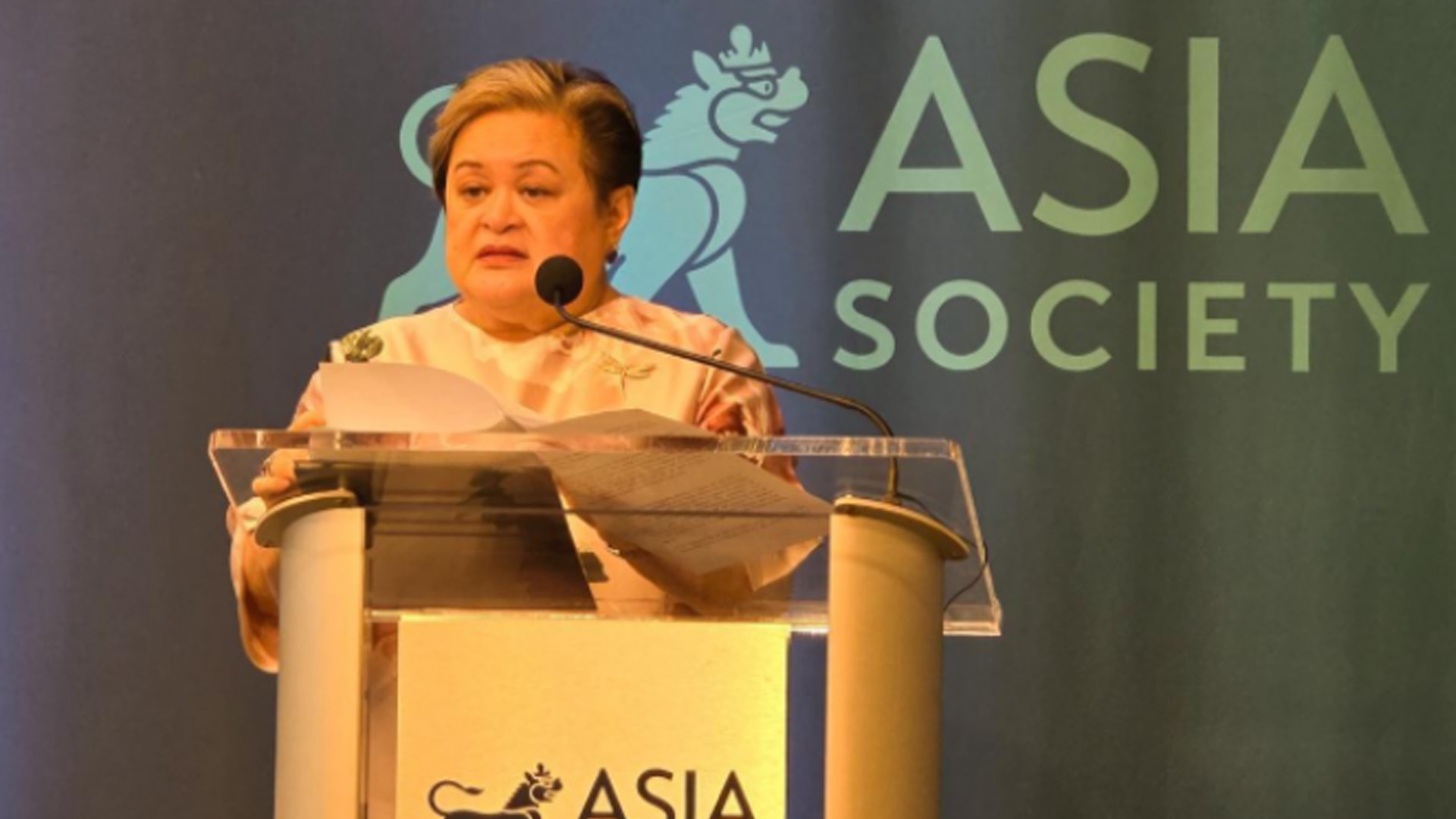
Foreign Affairs Secretary Ma. Theresa Lazaro made the statement during a dialogue hosted by the Asia Society Policy Institute (ASPI) in New York City on March 5, where she also outlined ASEAN’s priorities for 2026.
She said the Philippines’ chairship will focus on advancing regional peace and security, strengthening economic cooperation and resilience, and promoting a more people-centered ASEAN community.
“The Philippine Chairship in 2026 has set out an ambitious policy agenda to ensure that our region of 684 million people in 11 countries remains on track to become the fourth largest economy in the world,” Lazaro said.
“We aim to invest in resilience against current and emerging threats to regional peace and stability. We aim to achieve economic integration that is innovative, dynamic, inclusive and sustainable. And we will work to build a people-centered and people-oriented ASEAN Community.”
Under the new ASEAN Economic Community Strategic Plan, the bloc seeks to become a single market while improving cooperation across key areas such as digital transformation; innovation; micro, small and medium enterprises (MSMEs); intellectual property; consumer protection; energy; transport; minerals; and tourism, among others.
The plan, implemented starting this year, also prioritizes resilient supply chains, strengthened energy and food security, sound economic policies, and effective responses to shifting job demands.
At the New York dialogue, Lazaro also reflected on the shifting geopolitical landscape, noting that the world is entering a period marked by what she named as the three U — upheaval, uncertainty, and unpredictability.
She said that in recent years, the world witnessed a global pandemic, a military coup in Myanmar, Russia’s invasion of Ukraine, renewed conflict in the Middle East, intensifying strategic competition, and disruptions in global trade through the tariff wars.
Frequency and strength of climate-related disasters, she added, are growing while both economies and battlefields are now being shaped by fast-evolving technologies such as artificial intelligence (AI).
“This uncertainty is heightened by a shifting of global power, a reinterpretation of long-standing principles of international law, and increasing unilateral actions which challenge the multilateral system that we have built over decades,” Lazaro said.
As the world deals with these developments, ASEAN, she said, will strive to become a platform for dialogue and cooperation among nations.
“In an era of fragmentation and unilateralism, ASEAN’s response is geared towards enhanced regional integration and cooperation, stronger multilateralism, and peaceful engagement grounded in international law,” she added. (PNA)