
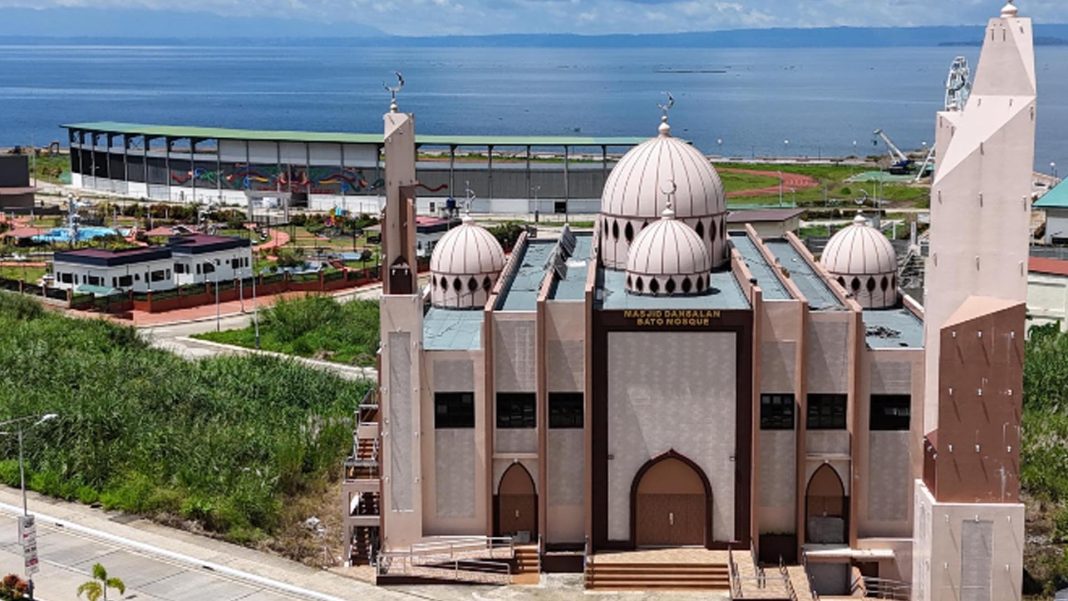






In the stillness of early morning, long before dawn breaks over Mindanao, a voice rises: “Sawooool!”
The call echoes through sleepy neighborhoods — a reminder to rise, to eat before the day’s fast begins. In some communities, mosque loudspeakers deliver the message. In others, neighbors walk narrow roads, shouting the wake-up call themselves. The ritual is simple. The meaning runs deep.
Ramadan, Islam’s holiest month, has begun.
In Lanao del Sur, the provincial government announced the start on Wednesday, Feb. 18, while the Darul Ifta of the Bangsamoro Autonomous Region in Muslim Mindanao declared it would begin Thursday, Feb. 19 — both based on crescent moon sightings by Islamic scholars.
Ramadan is the ninth month of the Islamic lunar calendar, commemorating the revelation of the Qur’an to Prophet Muhammad (peace be upon him). From dawn to sunset, Muslims abstain from food, drink and physical comforts — a practice Sultan Aminoden D. Guro describes as far more than physical discipline.
“Fasting is one of the Five Pillars of Islam,” said Guro, a Lanao del Sur Sultan and Northern Mindanao director of the Land Transportation Franchising and Regulatory Board. “But it is not simply about hunger. It is about discipline, humility, and awareness of Allah (swt). Through fasting, we learn empathy. We remember those who go hungry not by choice.”
As the body weakens without food or water, believers say the spirit grows stronger. Gratitude sharpens. Patience deepens. The fast becomes less about what is denied and more about what is gained.
At sunset, the atmosphere shifts. Families gather for iftar — the breaking of the fast — often beginning with dates and water, following the tradition of the Prophet. After the meal, many head to mosques for the special nightly Taraweeh prayers, where worshippers stand shoulder to shoulder in quiet devotion.
“Ramadan encourages deep inward reflection,” Guro explained. “It is a time to seek forgiveness, to break bad habits, and to strengthen one’s connection with Allah.”
If fasting teaches empathy, charity expresses it. Hadji Boy Arabi, a community leader in Zamboanga City, said generosity becomes instinctive during Ramadan.
“Muslims are encouraged to give more during this month,” he shared. “Food, clothing, financial assistance — whatever one can offer. Ramadan strengthens our responsibility to others.”
The obligatory almsgiving known as Zakat ensures the less fortunate are remembered, while voluntary acts of kindness multiply through anonymous donations, community feeding programs and support for struggling families.
Yet for all its communal warmth, Ramadan is also intensely private — the whispered prayer before dawn, the silent plea for forgiveness, the tear shed during recitation of the Qur’an.
For many believers, Ramadan feels like returning home — to faith, to discipline, to a clearer version of oneself.
The month concludes with Eid al-Fitr, a festival of gratitude and renewal. Families dress in finest clothes, special prayers fill open grounds, and children receive gifts. But beneath the celebration lies a deeper triumph: victory of self-restraint over impulse, of generosity over selfishness, of reflection over distraction.
Ramadan leaves its imprint long after the crescent moon disappears — a sacred pause in a hurried world, reminding believers that faith, compassion, and community are worth renewing again and again. (PNA)

